New Book Review: "Life Balance"
New book review for Life Balance: How to Convert Professional Success into Personal Happiness - Powerful Techniques for the Successful Practitioner (The Ultimate Consultant Series), by Alan Weiss, Jossey-Bass / Pfeiffer - A Wiley Imprint, 2009:
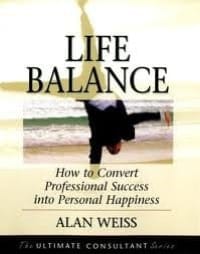

This text is part of a 7-part series by the author called "The Ultimate Consultant", and while this reviewer may not be interested in reading the entire series, another text in the series, "How to Establish a Unique Brand in the Consulting Profession: Powerful Techniques for the Successful Practitioner", was so well done that the premise of this book peeked my interest. It is not often that one finds material on the subject matter at hand – life balance that specifically addresses the consultant. As Weiss writes, "if you've achieved success in this profession – or expect to – then you deserve to enjoy that success in support of your life priorities". Balance at work, balance at rest, and balance in relationships is discussed, and a portion of the material presented originated from the author's "Balancing Act: Blending Life, Work, and Relationships" newsletter.
In the chapter entitled "Leverage – Archimedes Was Right: There's a Reason Why the 'Big Eight' Have Slimmed Down", Weiss offers an important reminder that this consultant appreciated: "There are several reasons for working hard and not smart, but the most critical is the search for perfection. We are tentative and hesitant to proceed unless we feel we've done everything possible to ensure success. However, most success is actually accomplished en route to the goal, meaning that the adjustments and modifications made along the way are the keys, since they are in reaction to real-time events and not hypothesized events. When you're 80 percent ready to move, move! The report, presentation, evaluation, meeting, workshop, or whatever will not be improved demonstrably by demonically seeking to improve that final 20 percent. Moreover, that final 20 percent of improvement is seldom perceived by the other party. In other words, the workshop participants, meeting attendees, reader of the report, person being evaluated, and other recipients can't appreciate the distinction of that final fifth. What they can readily appreciate are any adjustments you make that improve their lives."